Mercedes-Benz will offer a rare 1970 Mercedes-Benz C 111 prototype for public sale via RM Sotheby’s in Paris to fund museum upgrades.
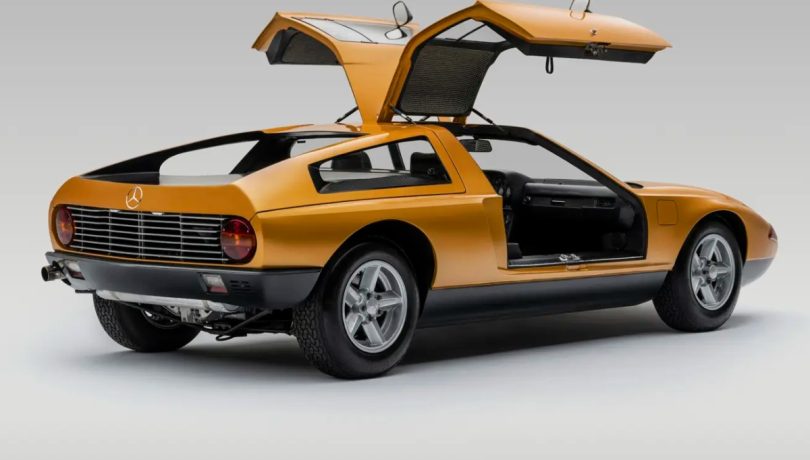
Mercedes-Benz AG will offer a rare Mercedes-Benz C 111 prototype for public sale for the first time. Auction house RM Sotheby’s will manage the bidding in the Salles du Carrousel at the Palais du Louvre in Paris on 3 February 2027. The sale coincides with the Rétromobile Paris classic car show. Pre-sale estimates for the vehicle exceed €25 million (approximately R482 million at the current Rand-Euro exchange rate).
Engineers built only 17 prototypes across all variants of the experimental super sportscar. One vehicle underwent crash testing, and mechanics dismantled three others during the 1970s. Thirteen examples remain in the company’s official collection today. No private buyer has ever owned a Mercedes-Benz C 111 prototype. Enthusiasts once sent blank cheques to Stuttgart during the 1970s in unsuccessful attempts to secure a car. Mercedes-Benz has also contractually committed to selling no additional C 111 prototypes for at least 25 years.
- Also read: Classic Drive: 1980 Mercedes-Benz 450SLC
Development history and provenance of car 33
The specific vehicle listed as Lot R0023 is a 1970 C 111-II known internally as Car 33. Assembly began in March 1970, and engineers installed the four-rotor engine in August of that year. Bearing registration plate S-Y 6200, the prototype served on the active factory test fleet. Engineers used this chassis to evaluate fuel flow from the two side-mounted tanks, measure rear boot temperatures, and test experimental anti-lock braking systems. The car also completed high-speed track testing at the Hockenheimring.

Famed conductor Herbert von Karajan inspected and experienced the C 111 project through this exact vehicle on the Stuttgart test track in 1971. Car 33 joined the official corporate vehicle collection in 1975. Visitors have viewed the prototype in the Fascination Design section of the Mercedes-Benz Museum since the facility opened in 2006.
Technical specifications and restoration details
The mid-mounted 2.4-litre M 950 W 48 four-rotor Wankel engine develops 257 kW and 392 N.m of torque. A five-speed ZF manual gearbox transfers power to the rear wheels. Weighing 1 240 kg, the Mercedes-Benz C 111 prototype achieves a factory-claimed sprint from 0-100 km/h in 4.8 seconds and a top speed of 300 km/h. Two side-mounted tanks hold a combined 116 litres of fuel.

Designers finished the glass fibre-reinforced plastic body in signature Weißherbst orange paint. Gullwing doors, retractable headlamps, and a drag coefficient of 0.325 define the aerodynamic profile. Inside, the cabin features grey-and-white houndstooth sports seats, a four-spoke safety steering wheel, and a vertically mounted Becker Europa radio.
The Mercedes-Benz Classic Center returned Car 33 to running order in 2024. Technicians overhauled the drivetrain and installed an engine bay fire suppression system, while preserving the original exterior and interior patina. The odometer displayed 24 766 km on an October 2026 inspection. The experimental anti-lock braking hardware remains deactivated to preserve historical originality. The sale includes the removable rear luggage tub, period-correct 15-inch road alloy wheels, and wider magnesium racing wheels from the 1970s.
Record-breaking legacy and museum expansion
Strict emissions regulations, high production costs, and the 1973 oil crisis prevented the model from entering series production. Mercedes-Benz repurposed subsequent C 111 prototypes into record-breaking test vehicles. The five-cylinder turbodiesel C 111-II D set 16 speed records in 1976. The twin-turbocharged V8 C 111-IV later reached 403.98 km/h at the Nardò circuit in Italy in 1979.

Proceeds from the Paris auction will fund the Mercedes-Benz Museum 2.0 project in Stuttgart. Management plans to update physical exhibitions and construct a virtual digital twin of the museum. Mercedes-Benz Heritage CEO Marcus Breitschwerdt stated that passing this vehicle to a new owner invests directly in brand heritage. Museum Director Bettina Haussmann added that the digital twin will allow global visitors to explore exhibits interactively. The Classic Car Trust and its Roarington platform are developing the virtual facility, with initial updates scheduled to debut in 2027.
Click here to browse thousands of new and used vehicles here with CARmag!